Way of Gaming
Reward System


ABCs of the Essential of Games
Some reference videos
Explain from multiple perspectives where the addiction mechanism comes from and how to use it to increase the fun of the game
1.
1.
Pavlov’s Classical Conditioning
Skinner’s Operant Conditioning: Rewards & Punishments
2.
Reward pathway in the brain | Processing the Environment | MCAT | Khan Academy
3.
The Power of Rewarding Yourself - Andrew Huberman
4.
Intrinsic vs Extrinsic - Designing Good Rewards in Games - Extra Credits
5.
How Gaming Affects Dopamine Reward Circuitry | Episode 004 Video Game Addiction
6.


01.Foreword
Hello everyone, I am Geoffrey, a high school student who loves games. Since I came into contact with "Honor of Kings" in the third grade, I have also played many mobile games. I have recently been obsessed with the two games "Apex Legends" and "CSGO". I spent about four or five hours on them over two days on weekends, constantly charging through the games. But when I got out of the game and calmed down, a question aroused my deep thinking, that is: Why am I addicted to the game?


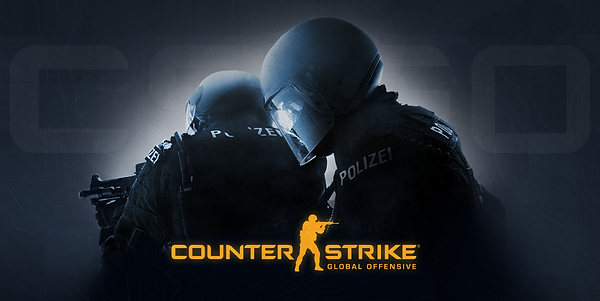
Many popular PC games are similar to mobile games. In addition to beautifully crafted characters and scenes, the most critical aspect of retaining game users should be its "reward mechanism." For example, daily login rewards, daily task rewards, level rewards, activity rewards and ranking rewards, etc., will always keep users fresh and stimulate their pleasure of acquisition.
So today I want to discuss with you the underlying logic of the reward mechanism in the game, including how the reward mechanism is reflected in real life.
02.About Reward Models And Concepts
Regarding reward models and concepts, I am very inspired by the views of Ben Lewis-Evans, a user experience researcher at Epic Games. “Rewards, rewards, are an important part of the game mechanism construction. The implementation process of the reward mechanism in the game is a communication between players and designers. The designers speculate on the players’ motivations, intentions and psychological state, and the players obtain incentives from the game. Enrich the experience and keep playing”.
Ben mentioned two reward mechanism models, one is Classic Conditioning, the classic model. The other is Operant Conditioning, operating model.
The classic model involves multiple connections between a stimulus and another unconditional stimulus that carries a reward or punishment. The most classic example, "Pavlov's Dog", uses the phenomenon that dogs will salivate when they see food. By sending a signal + food reward, the dog will associate with the two. Even if there is no food reward later, after sending the signal, the dog will salivate. The conditioned reflex of salivation is still maintained.

The game "Super Mario" is the application of the classic model in the game. Through the placement of specific gold coins, the game process of the player is the process of obtaining rewards, which drives and guides the player to pass the level.

Operate the model and obtain rewards by achieving certain conditions, which can be tasks or achievements. The model is derived from a classic experiment: the Skinner box experiment. The experiment cultivates the operator's behavior pattern by continuously repeating and establishing connections between behaviors and rewards.

Almost all games have operating models. You may be familiar with the following types of reward mechanisms:
① Fixed time variable ratio reward, that is, the daily check-in reward in the game;

*Daily login rewards
② Fixed ratio but not fixed time rewards, that is, level task rewards and experience value rewards in the game. At the same time, the game can stimulate users through increasing difficulty and increasing rewards, so that they continue to play the game;

*Event tasks and rewards

*Pass rewards
③ Probabilistic rewards, that is, you can get rare props and skins by drawing cards in the game, and they will drop with probability;

*Lottery

*Lottery
④ The superstitious behavior of mice is the wish-making ceremony before the probability of falling, an advanced version of ③. Players' "superstitious" psychology is used to design various ways to "open" rewards. Common ones include the "talisman drawing" ceremony before drawing cards in "Onmyoji", "Onmyoji Arena", "picturesque panorama of Jiangnan" and so on.

*Lottery ceremony

03.Dopamine
In the above two reward mechanism models:
"Pavlov's Dog" proved that the behavior of animals is caused by stimulation from the environment, which transmits stimulation signals to the nerves and brain, and the nerves and brain respond. The "Skinner box experiment" shows the relationship between stimulus and response, thereby effectively controlling the behavior of the organism.
At the same time, one thing we cannot ignore is that in the experiments of "Pavlov's Dog" and "Skinner Box Experiment", what was obtained were positive rewards, that is, the interactive objects were or were occasionally satisfied.
What if the reward is turned into a negative? To connect behavior + injury, we have to mention the "mouse experiment". Scientists tried to study the mice's response to fear by giving them electric shocks to certain areas of their brains. However, there was a slight error in the experiment. The electrode did not enter the area that controlled fear as expected, but instead entered an area that they later called the "pleasure center."
The system in the brain that can cause self-satisfaction and pleasure when stimulated is called the brain reward system, which is part of the most primitive power system in the brain. One of the major neurotransmitters in the reward system is the “pleasure” chemical dopamine.

Later, even if the person no longer presses the lever, the mouse will actively press the lever in search of pleasure.
Behavior + Reward → Dopamine → Continued Behavior
Games are addictive, which is driven by the pleasure of positive rewards (dopamine) during the game.
04.Social Impact of Reward Mechanisms
Based on the above content, we can roughly know that the "reward mechanism" can have a certain impact on the behavior of interactive objects. So, leaving the game world, does the application of "reward mechanism" have practical significance in society?
Charlie Munger has two examples in "The Psychology of Misjudgment":
1. FedEx case. FedEx's night shift workers are always unable to complete their work on time. In order to earn more wages, they work longer hours, resulting in delays in cargo transportation, low work efficiency, and a negative impact on the company. FedEx then paid its workers according to their shift and allowed night shift workers to go home early after loading all the goods on the plane. This worked well.

2. Xerox Company Case. New Xerox machines in the early days always didn't sell as well as older machines with poor performance. When selling old machines to customers, salespeople can get very high commissions; under this incentive mechanism, inferior old machines sell better than high-quality machines.
Reward mechanisms are everywhere, whether in games or in society, only by formulating the correct "reward mechanism" can it run smoothly.
05.Ending
Regarding the issue of reward mechanisms, although I was inspired by games, this mechanism is deeply rooted in all aspects of social production and life and deserves careful study. If you take advantage of this rule, wonder what the effects will be?
Next, I will complete a social experiment project focusing on the "reward mechanism" and observe the impact of the "reward mechanism" on users during its implementation and its subsequent evolution. Everyone, please stay tuned!
06.References
【UI Sharing】Thoughts on the application of reward mechanism in games
How does the brain's reward system affect our lives?
Charlie Munger: The impact of the “reward mechanism” on us